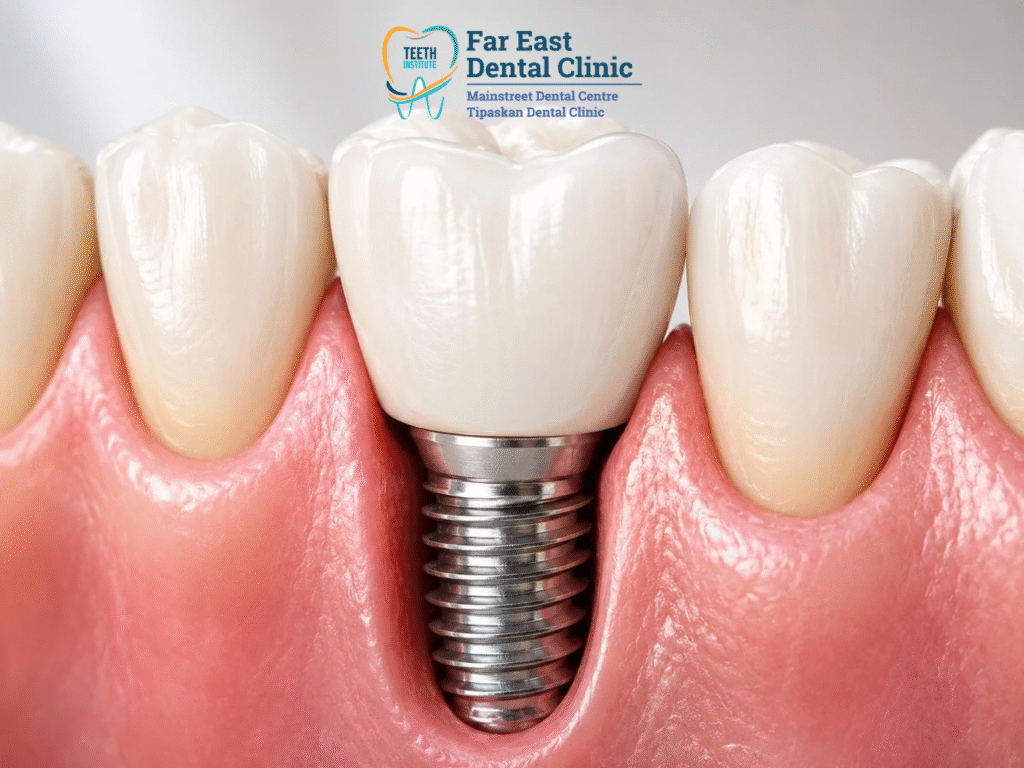
Dental implants are a popular option for replacing missing teeth. They can restore chewing function, improve smile appearance and provide a stable foundation for replacement teeth. However, getting a dental implant is a process that involves more than the surgery itself. Your gums and jawbone need time to heal before the final restoration can be placed.
One of the most common questions patients ask is: How long does it take to recover from dental implant surgery?
In most cases, the initial recovery takes about one to two weeks. However, the jawbone may need three to six months or longer to bond with the implant. This process is called osseointegration. Your healing time depends on your oral health, bone condition, treatment complexity and the type of implant procedure.
If you are considering dental implant surgery in Edmonton, understanding the recovery process can help you prepare and make informed decisions about your dental care.
Dental implant recovery happens in stages. You may feel better within a few days, but complete healing takes much longer.
Here is a general overview:
| Recovery Stage | What to Expect |
|---|---|
| First 24–48 hours | Mild bleeding, swelling and discomfort may occur |
| Days 3–7 | Swelling and soreness should gradually improve |
| Week 1–2 | Gum tissue continues healing |
| Weeks 2–6 | Soft tissue recovery progresses |
| Months 3–6 | The implant continues bonding with the jawbone |
| After healing | The dentist assesses whether the final crown or restoration can be placed |
These timeframes are general estimates. Some patients heal faster, while others need additional time.
For example, patients who need bone grafting or more complex procedures may have a longer recovery period.
The important difference: Feeling comfortable after surgery does not always mean the implant has fully bonded with your jawbone.
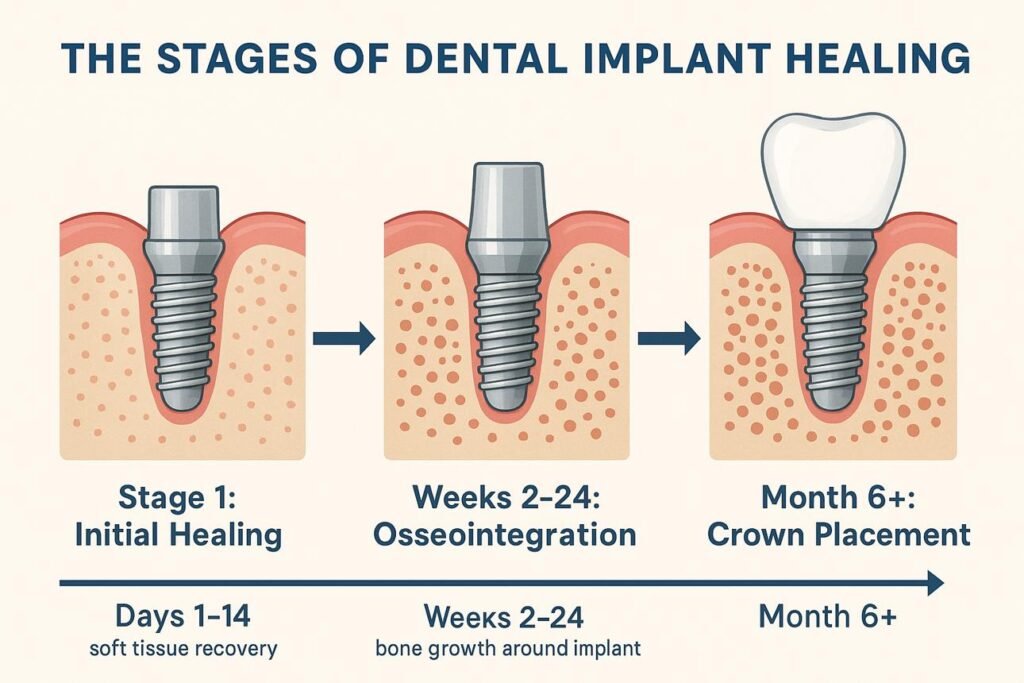
Dental implant healing involves several stages. Each stage helps create a stable foundation for your replacement tooth.
The first two days are important for protecting the surgical area.
You may experience:
These symptoms can occur after oral surgery.
Your dentist may recommend rest, prescribed medication and cold compresses to manage discomfort and swelling.
Avoid touching the surgical area with your fingers or tongue. Follow your dentist’s instructions about rinsing, brushing and eating.
During the first week, swelling and tenderness should gradually improve.
Your body begins repairing the gum tissue around the implant. You may also have a follow-up appointment to check the surgical area.
During this stage:
Some patients can return to normal daily activities within a few days. However, this depends on the procedure and how they feel.
Over the following weeks, the gum tissue continues to heal around the implant.
Your dentist may check the surgical site and monitor your progress. If stitches were placed, they may dissolve naturally or need removal, depending on the type used.
Even if the gums look healthy, the implant may still need more time to bond with the jawbone.
Osseointegration is the process in which the surrounding jawbone grows around and bonds with the dental implant.
This stage is essential because it helps hold the implant securely in place.
It commonly takes around three to six months, although some cases take longer.
Your dentist will assess the healing progress before deciding when the final crown, bridge or implant-supported restoration can be placed.
Learn more about available dental implant restoration options in Edmonton.

Your diet plays an important role in protecting the surgical area.
During the early recovery period, choose foods that require little chewing. Avoid putting unnecessary pressure on the implant site.
Here are some soft food options that may be suitable during recovery:
Choose nutritious foods that provide protein, vitamins and minerals. These nutrients support normal tissue repair.
Some foods can irritate the surgical area or put pressure on the implant.
Avoid or limit:
Your dentist may recommend avoiding certain foods for several days or longer, depending on your procedure.
Tip: Chew on the opposite side of your mouth when possible. Do not return to hard or crunchy foods until your dentist confirms it is safe.

Following your post-operative instructions can help protect the implant and support healing.
Here are some important precautions.
Smoking can interfere with healing and increase the risk of implant complications.
If you smoke, discuss a plan to stop before surgery and avoid smoking during recovery. Your dentist can provide guidance based on your treatment.
Heavy exercise, running and lifting weights may increase bleeding or discomfort immediately after surgery.
Rest during the initial recovery period. Ask your dentist when you can safely return to your regular exercise routine.
Avoid touching, pressing or pulling at the implant site.
Do not use your fingers to check the area. Follow your dentist’s instructions for brushing and rinsing.
Hard or crunchy foods can put pressure on the healing area.
Choose soft foods and gradually return to your regular diet only when your dentist approves.
Follow-up visits help your dentist monitor gum healing and implant stability.
Even if you feel comfortable, these appointments are important. They help determine whether the implant is ready for the next stage of treatment.
Not everyone has the same recovery experience. Several factors can influence how quickly your mouth heals.
Healthy gums provide a better environment for implant healing. Existing gum disease may need attention before implant treatment.
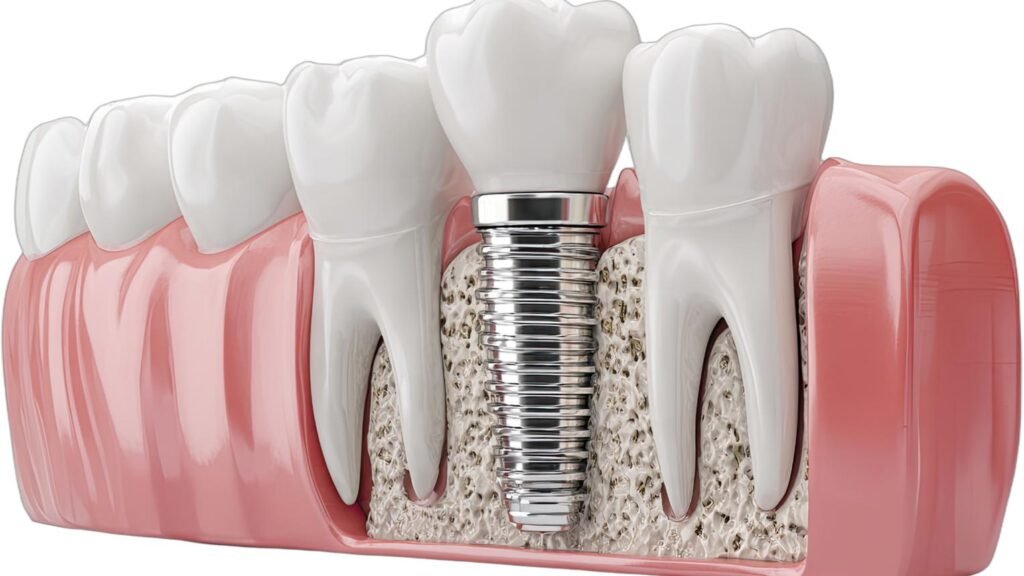
The implant needs adequate jawbone support. If there is not enough bone, your dentist may recommend bone grafting before or during implant placement.
This can extend the overall treatment timeline.
Recovering from one implant may be different from recovering from multiple implants.
More extensive procedures may cause additional swelling and require a longer recovery period.
Your overall health, medications, smoking habits and ability to follow post-operative instructions can influence healing.
Your dentist will consider these factors when planning treatment.
Some patients need additional procedures, such as tooth extraction or bone grafting. These steps can affect the healing schedule.
For this reason, there is no single recovery timeline that applies to everyone.
Some discomfort and swelling are expected after surgery. However, certain symptoms should not be ignored.
Contact your dentist if you experience:
Seek urgent medical attention if you have difficulty breathing or swallowing or rapidly spreading facial or neck swelling.
Do not wait for your next scheduled appointment if you notice concerning symptoms.
Good aftercare can help protect your implant and support the healing process.
Keep these tips in mind:
Remember that implant healing takes patience. Avoid rushing back to normal chewing before your dentist confirms that the implant is ready.
For many patients, dental implants can be a useful long-term option for replacing missing teeth.
They can help:
However, dental implants are not suitable for everyone. Your dentist will assess your oral health, bone condition and treatment needs before recommending an option.
You can also explore the differences between dental implants and bridges in Edmonton to understand the available tooth replacement options.
For more information about restorative treatment, visit our Restorative Dentistry Edmonton page.
Initial recovery usually takes one to two weeks. However, the implant may need three to six months or longer to bond with the jawbone. The exact timeline depends on your procedure and healing progress.
Gum tissue generally heals over the first few weeks. Complete bonding between the implant and jawbone can take around three to six months or longer. Your dentist will monitor the process before placing the final restoration.
Soft foods such as yogurt, mashed potatoes, scrambled eggs, oatmeal and soft pasta are common options during early recovery. Avoid hard, crunchy and sticky foods until your dentist says it is safe to eat them.
Some patients return to work within a day or two. Others may need more rest, especially after multiple implants or complex surgery. Follow your dentist’s advice based on your procedure.
Yes. Some swelling and bruising can occur after surgery. Swelling may increase during the first two to three days before gradually improving. Contact your dentist if swelling becomes worse or is accompanied by other concerning symptoms.
Yes, but you must follow your dentist’s instructions. You may need to avoid brushing directly over the surgical site initially. Use a soft toothbrush and clean the area gently when your dentist says it is safe.
This depends on your healing progress and the type of procedure. Many patients gradually return to a wider range of foods as the gums heal. However, you should not put heavy chewing pressure on the implant until your dentist approves.
Some soreness, swelling and tenderness are common after surgery. Your dental professional may recommend appropriate pain management. Severe or worsening pain should be evaluated.
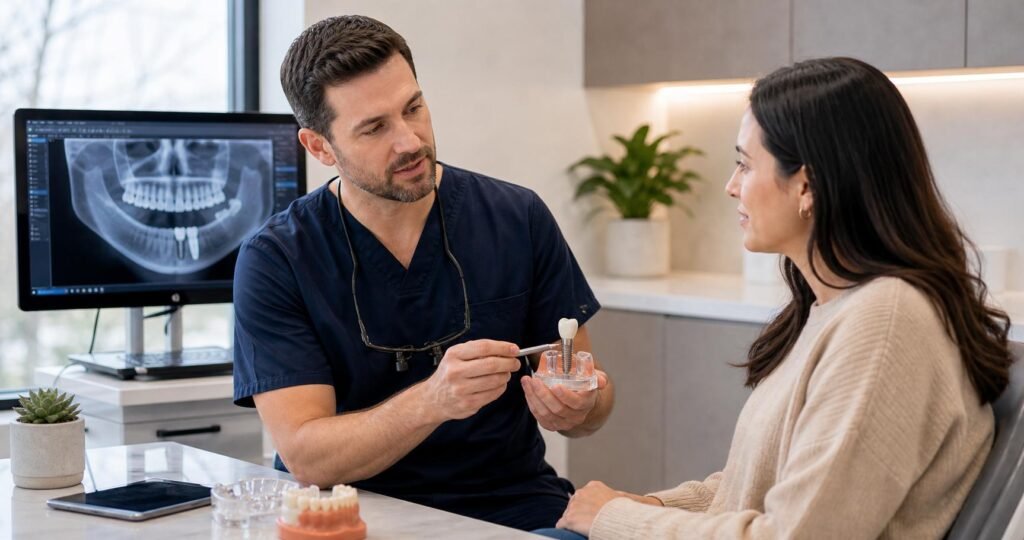
Recovering from dental implant surgery takes time, but understanding each healing stage can make the process easier to manage.
Following your dentist’s instructions, choosing suitable foods and attending follow-up appointments can help support a healthy recovery.
If you are considering dental implant surgery in Edmonton, Far East Dental Centre can help you understand your treatment options and the steps involved in restoring your smile.
Contact Far East Dental Centre to discuss your dental implant needs and arrange a consultation.