Home » What Should You Do Before Seeing an Emergency Dentist in Edmonton?
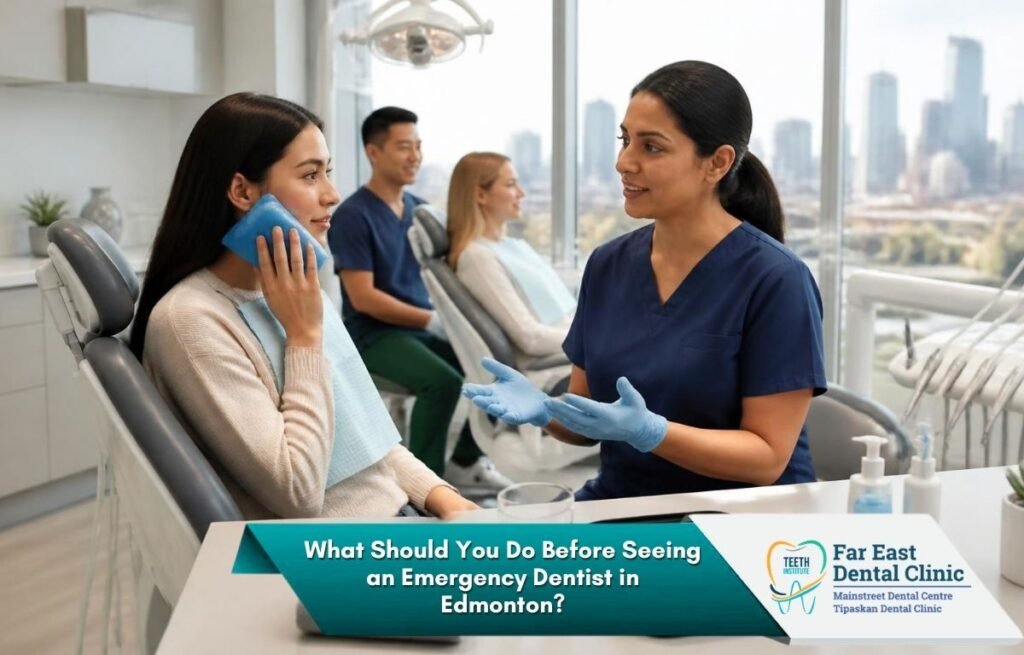
A dental emergency can happen without warning. A tooth may break while eating, severe pain may start suddenly, or an accident may cause a tooth to become loose or knocked out.
When this happens, knowing what to do before seeing an emergency dentist in Edmonton can help protect your tooth and prevent the situation from becoming worse.
While temporary care cannot replace professional treatment, a few simple steps can make a difference while you arrange an urgent dental appointment.
The first step is to stay calm and look at the situation carefully.
Ask yourself:
This information can help your dentist understand what happened and determine how urgently you need to be seen.
If you have severe facial swelling or difficulty breathing or swallowing, seek emergency medical care immediately.
If your mouth is dirty or contains food or debris after an injury, gently rinse with clean water.
Do not aggressively scrub the injured area.
A gentle rinse can help keep the mouth cleaner while you arrange professional dental care.
If the injury has caused significant bleeding, focus on applying gentle pressure with clean gauze or a clean cloth.
A knocked-out permanent tooth requires prompt attention.
If you can find the tooth, pick it up carefully by the crown, which is the part normally visible above the gum.
Avoid touching the root.
If the tooth is dirty, gently rinse it with water. Do not scrub the root or use harsh cleaning products.
If it can be safely placed back into the socket, do so gently without forcing it. If that is not possible, keep the tooth moist while seeking urgent dental care.
Time matters when dealing with a knocked-out permanent tooth.
You can also read our guide on knocked-out tooth emergency dental care in Edmonton for more information.
A broken or cracked tooth can become more painful if you continue chewing on it.
Until you see a dentist:
Depending on the extent of the damage, your dentist may recommend restorative treatment to protect the tooth.
Our article on treatment options for cracked and chipped teeth explains some of the available approaches.
If swelling develops after an accident or impact, a cold compress applied externally to the cheek can help reduce discomfort and swelling.
Wrap the cold source in a cloth rather than placing ice directly against the skin.
Use it for short periods and give your skin breaks between applications.
However, swelling around a tooth that develops with tooth pain may have a different cause, such as an infection. This should be assessed by a dentist rather than treated only with a cold compress.
Severe tooth pain can make it difficult to eat, sleep, or concentrate.
While waiting for an appointment:
Do not place aspirin directly on your tooth or gums. It can irritate or damage soft tissue.
Severe or persistent pain should be evaluated by a dentist because pain relief alone does not address the underlying cause.
Bleeding can occur after a dental injury or damage to the gums.
Place clean gauze or a clean cloth over the area and apply gentle, steady pressure.
If bleeding continues or is difficult to control, contact a dental professional promptly.
Heavy or uncontrolled bleeding may require emergency medical attention.
A lost filling or crown can expose the affected tooth and make it sensitive.
If this happens, keep the restoration if you still have it and contact your dentist.
Until you receive professional care:
Do not permanently glue a dental crown back onto your tooth using household glue.
Your dentist needs to assess the tooth and restoration before deciding whether it can be repaired or needs replacement.
Some dental emergencies are caused by infection.
Warning signs may include:
A dental infection should be assessed promptly.
If swelling becomes severe or causes difficulty breathing or swallowing, seek emergency medical attention immediately.
You can learn more about dental abscess treatment in Edmonton and why prompt professional assessment matters.
It can be tempting to search for a quick home remedy when you are in pain.
However, avoid:
Temporary measures should only help you manage the situation until you receive professional care.
When you contact an emergency dentist in Edmonton, be ready to explain what happened.
Tell the dental team:
If the problem happened because of an accident, explain how the injury occurred.
Clear information can help the dental team understand your situation and determine the appropriate next step.
If possible, bring:
If the emergency happened because of an accident, also tell the dentist when and how it occurred.
You should contact a dentist promptly if you experience:
Not every dental problem requires same-day emergency treatment. However, if you are uncertain, contacting a dental professional and explaining your symptoms is a safer approach than ignoring the problem.
For additional information, see our page about emergency dentistry in Edmonton.
You cannot prevent every dental emergency, but you can make the situation easier to manage.
Consider:
Regular dental examinations can help identify developing problems before they turn into unexpected emergencies.
You can learn more about dental exams and checkups in Edmonton.
Stay calm, protect the affected area, and contact a dental professional. Depending on the emergency, you may need to control bleeding, protect a broken tooth, or carefully preserve a knocked-out tooth while arranging urgent care.
It depends on the situation. If you can eat comfortably, choose soft foods and avoid chewing on the affected area. If you have severe pain or an upcoming procedure, ask the dental office whether you should eat beforehand.
No. Aspirin should not be placed directly against the tooth or gums because it can irritate soft tissue. If you normally can take an over-the-counter pain reliever, follow the product’s directions instead.
Handle the tooth by the crown rather than the root. If possible, gently rinse it with water and seek urgent dental care. Do not scrub the root.
Dental problems such as severe tooth pain, broken teeth, or dental infections are generally assessed by a dentist. However, serious facial trauma, uncontrolled bleeding, or swelling that affects breathing or swallowing may require emergency medical attention.
It depends on the extent of the damage. A small, painless chip may not require emergency treatment, while a painful fracture, significant damage, or exposed inner tooth structure should be assessed promptly.
A dental emergency can be stressful, but knowing what to do before your appointment can help protect your teeth and reduce the risk of additional damage.
If you are experiencing severe pain, swelling, a broken or knocked-out tooth, bleeding, or another urgent dental concern, contact Far East Dental Centre to discuss your situation and arrange appropriate care.
Far East Dental Centre
10111 107 Ave NW
Edmonton, AB T5H 0V4
Phone: +1 (780) 428-2288
Email: Info@fareastdentalcentre.ca
For non-emergency concerns, regular dental care can also help identify potential problems before they become urgent.
When in doubt about a serious dental problem, contact a dental professional promptly.

Far East Dental Centre offers convenient, comprehensive dental services for Edmonton families and individuals.
© 2026 Far East Dental – Precision in Dentistry, Precision in Design — Webital Technologies & Signages